
When the days shorten and the weather turns cold, natural food becomes harder for garden birds to find. Insects are scarce, the ground may freeze, and ripe seeds and berries are quickly used up. A well-kept feeding station will not replace the wild food in a garden, but it can help birds through the leaner months, especially in spells of frost or snow.
This guide covers a simple, practical way to offer dried mealworms in winter, alongside the usual mix of seeds and fresh water. It is general bird-care advice, not a substitute for local wildlife guidance if you have a specific problem.
Why mealworms are useful in winter
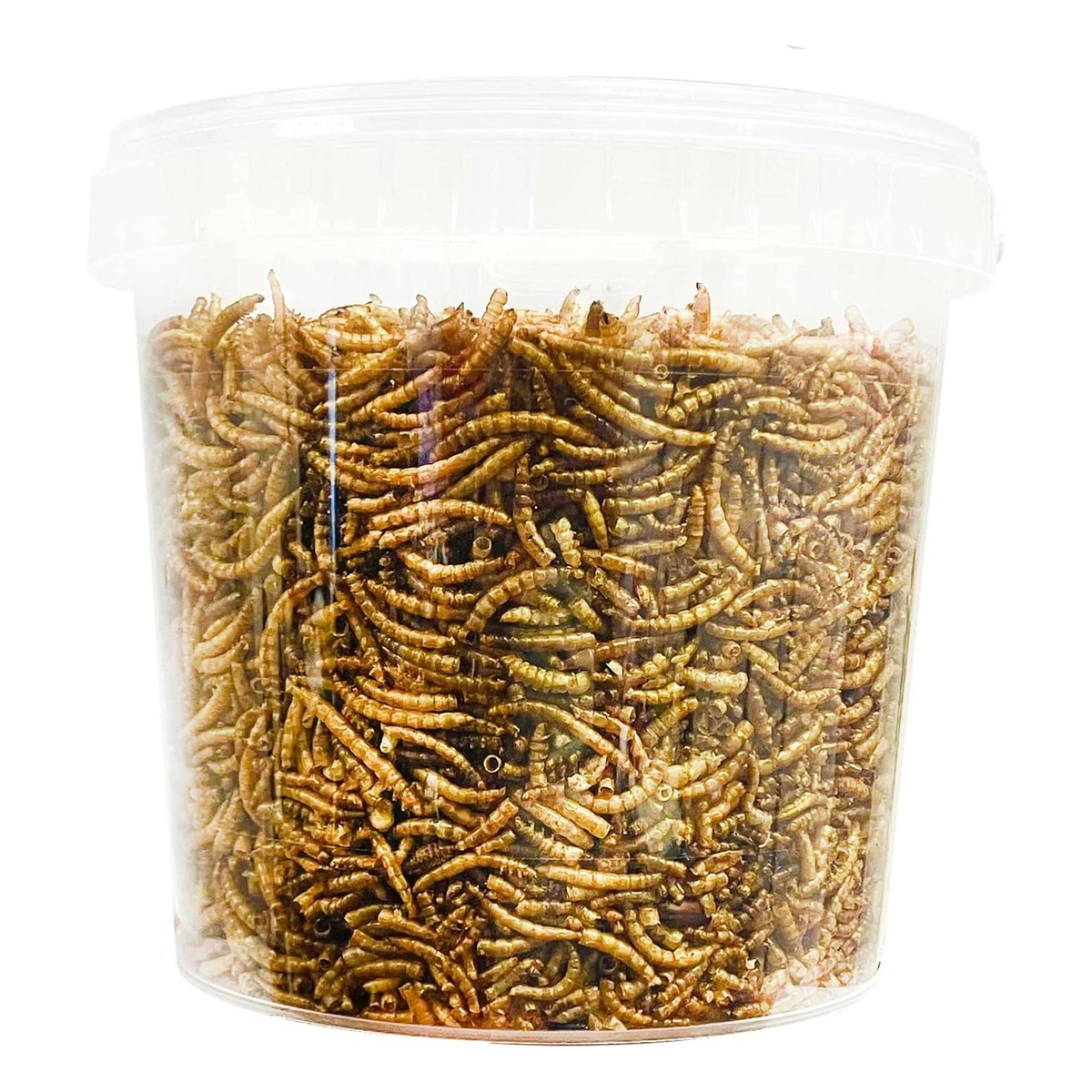
Dried mealworms are the dried larvae of the mealworm beetle. Garden birds that naturally hunt insects — including robins, blackbirds, wrens, starlings and several of the tits — will often take them from a dish or a bird table. They are a concentrated food, so they work well as part of a winter menu rather than as the only thing on offer.
A varied mix is better than a single food. Keep sunflower hearts, a good seed mix or suet alongside the mealworms, and let the birds choose. That way you are supporting more than one feeding habit at once.
How to put them out
Offer dried mealworms in a shallow dish, on a bird table, or in a ground tray that is raised just off the soil so the food stays cleaner. A little cover overhead, such as a table roof, helps keep rain off, because soaked mealworms spoil more quickly.
Put out a modest amount at a time and top up when the dish is emptying, rather than leaving a large pile that can go damp or mouldy. If the food gets wet, clumped or smells off, throw it away and wash the dish before you refill it.
Some people prefer to soak dried mealworms in a little clean water for a short time before putting them out, which can make them easier for birds to eat. If you do that, offer only what will be taken promptly, and do not leave wet food sitting out to sour.
Keep the feeding station clean
Clean feeders, dishes and tables regularly in hot, soapy water, rinse them well and let them dry. Clear away spoiled food and droppings under the table so the ground does not become soiled. Move the feeding spot from time to time if the grass beneath it suffers. Hygiene matters in winter as much as in summer, because birds gather in the same places each day.
Wash your hands after handling feeders, and store bags of food somewhere dry, cool and sealed, away from pets and pests.
Water and shelter matter too
Food is only part of the picture. Birds also need to drink and to bathe, even in cold weather. A shallow dish of fresh water, emptied and refilled often, is useful; if it freezes, replace it with fresh water rather than adding salt or antifreeze, which are harmful. A slight slope or a stone in the dish gives birds a foothold.
Dense shrubs, hedges and evergreens nearby give birds somewhere to sit and watch before they drop in to feed, and somewhere to roost when the temperature falls.
Choosing a supply
If you would like a store of dried mealworms to keep the dish topped up through the winter, Invigortex sells UK Grow Dried Mealworms. They come in volumes from 1 litre to 25 litres, in a bucket or a clear bag, and orders placed by 3pm are sent next day.
Measure out what you need for a few days at a time and keep the rest sealed, so the food stays dry until you use it.
A simple winter routine
You do not need a complicated set-up. A clean dish of mealworms, a seed feeder, unfrozen water and a little cover nearby will do a great deal of good. Keep an eye on the weather, refill little and often, and tidy the station as part of your usual garden jobs. The birds will quickly learn where to come — and they will keep visiting as the days begin to lengthen again.
Leave a Reply