
As the days lengthen, most houseplants begin to grow again. New leaves appear, watering becomes a little more frequent, and it is a sensible time to look at the pot and the potting mix, not only at the plant itself. Repotting is not something every plant needs every year, but spring — once growth is starting and the darkest weeks have passed — is the usual season to do it.
This is general potting advice. Follow any care notes that came with an unusual plant, and do not rush a plant that is flowering or clearly stressed.
When a plant is ready for a new pot
Look at the roots and the mix, not just the calendar. Common signs that a houseplant may need repotting include:
- Roots growing out of the drainage holes, or a dense mat of roots when you ease the plant from its pot
- Water running straight through the pot, as if the mix can no longer hold it
- The mix looking tired, compacted or pulling away from the sides
- The plant becoming top-heavy or drying out much faster than it used to
- Little or no new growth once the days have improved, even with regular care
If the plant is still sitting happily with a little room in the pot and a fresh-looking mix, it may only need the top layer of mix refreshed, rather than a complete move.
Choose a pot only a little larger
A jump to a much bigger pot leaves a large volume of mix that stays wet around the roots. Choose the next size up, with at least one drainage hole in the base. A saucer under the pot will catch the excess water; empty it after watering so the plant is not left standing in a puddle.
If you are reusing an old pot, wash it first so you are not carrying old mix and deposits into the new planting.
A potting mix that drains freely
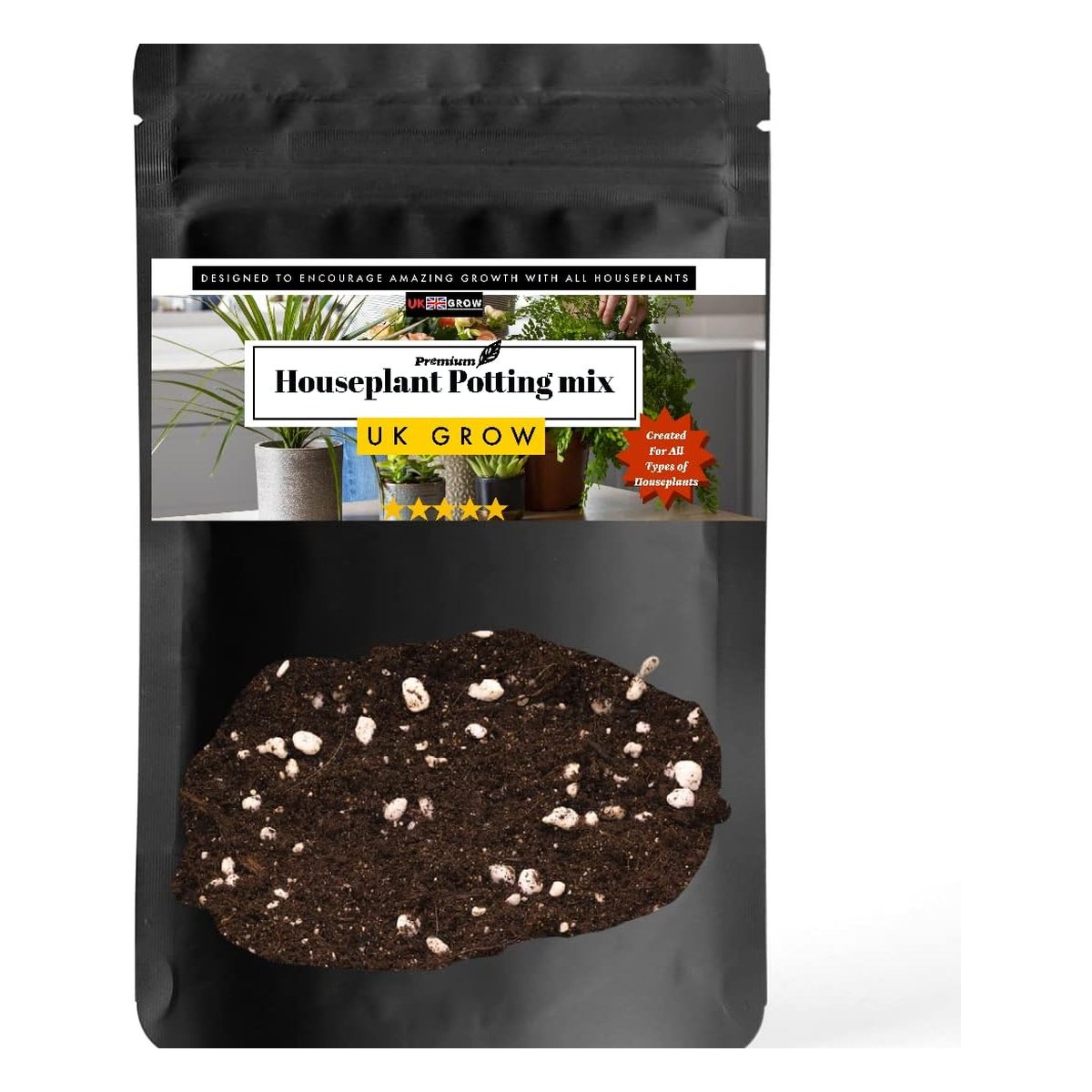
Houseplants do better in a mix that stays open, rather than one that packs down into a dense mass. A mix that includes perlite — a light, porous volcanic glass used by gardeners to keep compost aerated — helps water drain and air reach the roots.
Invigortex sells UK Grow Houseplant Potting Mix with Perlite in bags from 1 litre to 100 litres and in buckets from 1 litre to 30 litres, so you can match the size to the number of plants you are moving. If you are refreshing a mix you already like, you can also open it up with a little perlite of your own.
Avoid packing the fresh mix down hard; a light firming is enough to take away large air pockets.
How to repot, step by step
- Water the plant an hour or two beforehand, so the root ball slides out more easily.
- Tip the pot and ease the plant out, supporting the stems and soil with your hand. If it sticks, run a blunt knife around the inside edge rather than pulling on the stems.
- Gently loosen any roots that are circling the bottom, and tease away loose, spent mix. You do not need to wash the roots bare.
- Put a little fresh mix in the base of the new pot. Sit the plant at the same depth as before — do not bury the stem deeper.
- Fill around the sides, firming lightly as you go, and leave a small gap at the rim so water does not spill over the edge.
- Water thoroughly and let the pot drain. Top up the mix a little if it settles.
Stand the plant in a bright place, out of cold draughts and away from a hot radiator, while it settles.
Aftercare in early spring
The plant will often look much the same for a little while. That is normal. Keep the mix lightly moist, not soaked, and give it time to settle before you return to a regular feeding routine. New growth is the sign that the roots have taken hold in the fresh mix.
Wipe the leaves if they are dusty, so they can make the most of the improving light, and turn the pot now and then so the plant grows evenly.
A short afternoon with a bag of potting mix, a slightly larger pot and a saucer is often all it takes to set a houseplant up for the months ahead. Once the job is done, the plant can put its energy into leaves and stems rather than into a tight, exhausted root ball — and you can enjoy the better growth that spring light brings.
Leave a Reply